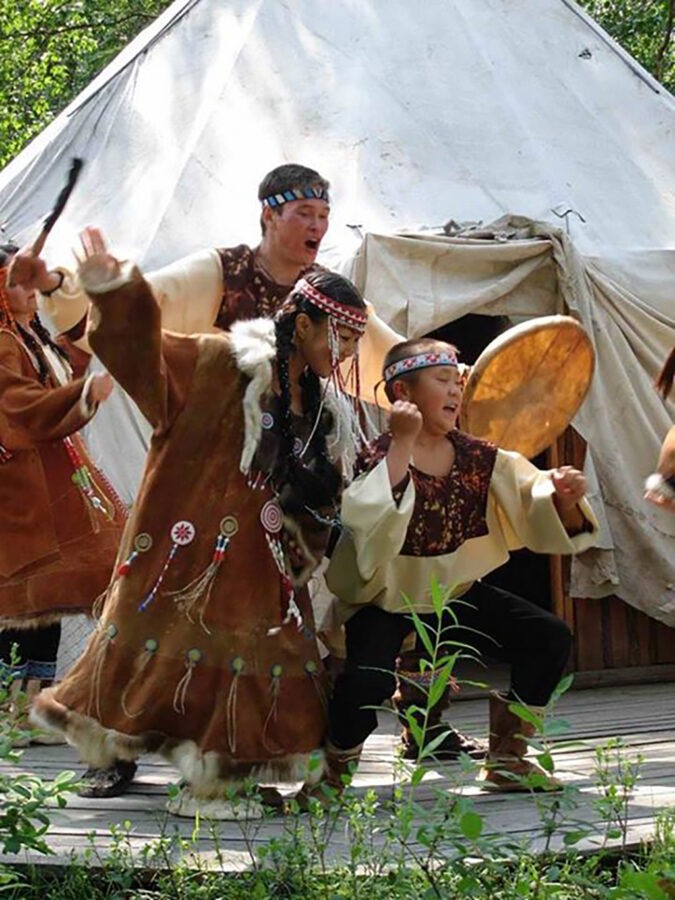
Discover the sacred traditions, colonial history, and enduring spirit of the Itenman people of East Siberia, where dance is more than movement — it’s a prayer of survival.
Dancing Is Our Prayer: The Resilient Spirit Of The Itenman People
Tucked deep in the rugged landscapes of East Siberia, the Itenman people — also known as the Itelmens — have lived on the Kamchatka Peninsula for thousands of years. Their name, meaning “existing,” “inhabitant of dry land,” or simply “a human being,” speaks volumes about their relationship with nature and the sacred ground they walk upon.
This image of Itenman dancers in traditional dress captures a moment that goes beyond art — it represents a prayer in motion. For the Itenmans, dancing is not merely for celebration; it is a profound spiritual practice, an offering, and a remembrance of all that has been endured.
A Deep Spiritual Connection - Traditionally skilled in fishing, hunting, and herbal medicine, the Itenmans were regarded as some of the most knowledgeable herbalists among the Siberian peoples. Their way of life was deeply intertwined with the natural world and guided by animistic and shamanic beliefs.
Despite intense efforts to erase their identity during the 18th-century Russian colonization — including forced conversion to Orthodox Christianity, unfair tribute systems, and repeated uprisings — the spiritual core of the Itenman people survived. Monasteries were established, and Russian settlers imposed economic and ideological pressure. Yet, the Itenmans resisted, rising in rebellion multiple times before being brutally suppressed and dispersed.
Colonialism, Resistance, and Survival - The early 1700s saw waves of oppression: fur tributes, seizure of goods, hostage-taking, and the ravages of foreign diseases like typhoid and smallpox. In 1740, nearly all Itenmans rose against the Russians, only to face defeat and forced assimilation.
Even as tools and customs changed — iron implements, vodka, tobacco — the spiritual legacy endured. The resilience of the Itenman people lies in their ability to adapt without entirely surrendering their identity. Their shamanic traditions, though threatened by Christianity and later communism, quietly endured the centuries.
A Culture That Still Breathes - Today, photos like this traditional dance ceremony are powerful reminders that the spirit of the Itenman people has not vanished. Their dances, stories, and songs remain expressions of their enduring identity, resisting erasure.
As we witness these images and learn their history, we’re reminded that indigenous cultures around the world hold ancestral wisdom forged in survival. The Itenmans teach us that when a people dance not just for joy but for remembrance and resistance, their prayers echo for generations.
References and Further Reading
- HMONGSANDNATIVEAMERICANS.COM
- Hmongs & Native Americans
- Native American-Turanian Brotherhood: First Nations First - “Dancing is our Prayer” – This picture is showing native Siberian Itenman (or Itelmens) people in their traditional dress. Itenmans (which means ‘existing’ , ‘living here’, ‘an inhabitant of dry land’ or just ‘a human being’) are the original inhabitants of the Kamchatka peninsula, East Siberia (Northeast Asia).